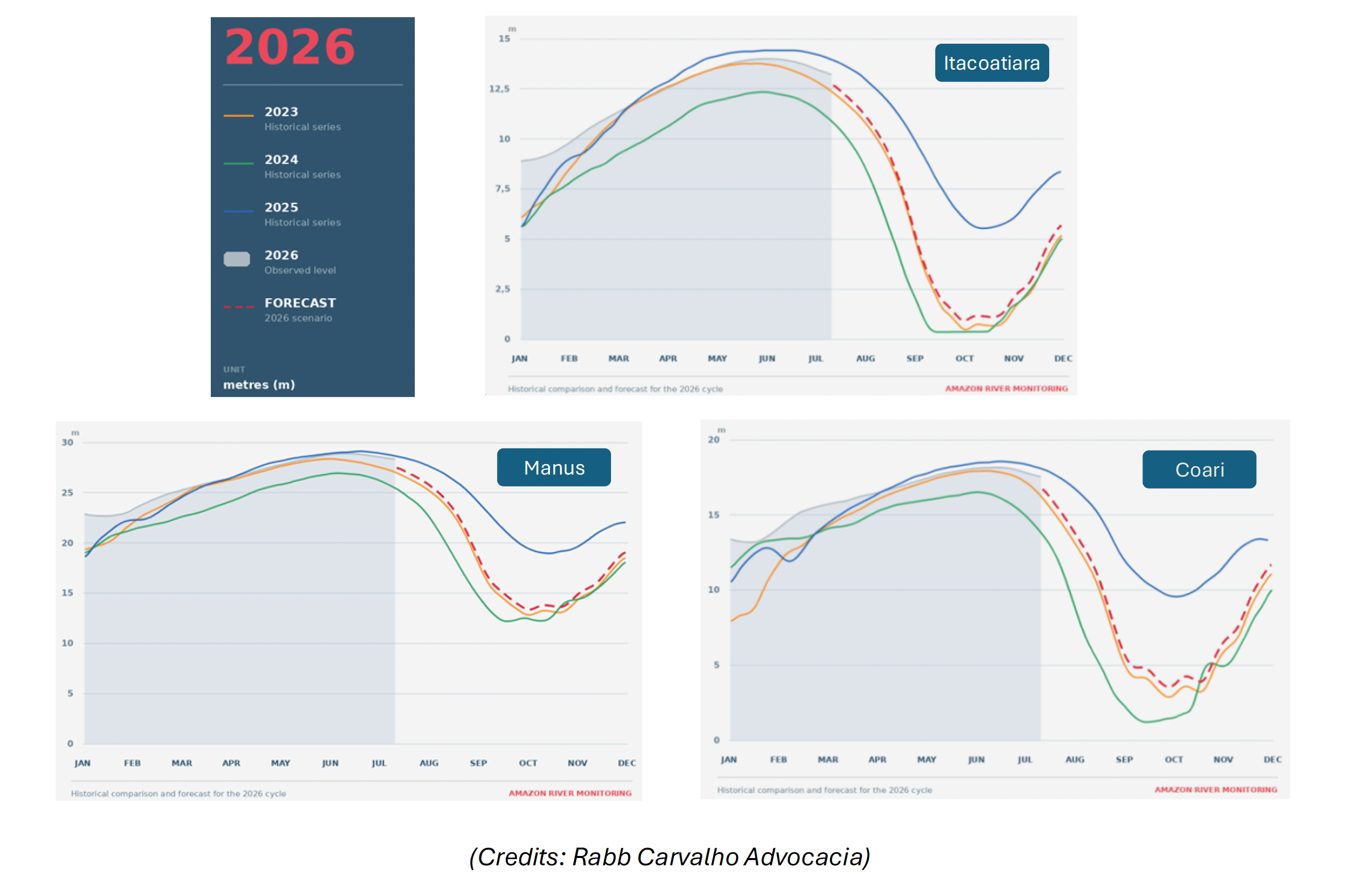
Recent forecasts indicate that parts of the Amazon basin may experience exceptionally low water levels during the 2026 dry season, potentially resulting in navigation restrictions, reduced vessel drafts and operational disruption across key waterways serving Brazil's Northern Arc trade corridor. Authorities and industry stakeholders have warned that river conditions during the second half of 2026 could resemble or exceed those experienced during severe droughts in recent years.
Written by

Published 10 August 2026
Seasonal Variations and Forecasts
The Amazon basin is characterized by distinct wet and dry seasons, with river levels typically declining between June and November. While seasonal fluctuations are a normal feature of navigation in the region, forecasts associated with potential El Niño conditions have heightened concerns that water levels could fall significantly below normal seasonal averages.
Navigational Restrictions
Reduced water depths are likely to narrow under keel clearance margins and expose previously submerged hazards, while silting and sediment movement may alter channel conditions and navigable depths. As shoals and channels shift, reliance on current navigational information and local pilot advice becomes increasingly important.
Gard Claims Experience
Gard's insight - Incident hot spots - a global overview of navigation incidents published in 2021, identified the Amazon region as an area susceptible to grounding incidents. Consistent with this observation, Gard's claims data (across different covers) for 2021-2025 indicates a continued exposure in the region. The cases recorded during this period were approximately 35% higher than the average recorded during the preceding three-year period, highlighting heightened navigational risk during periods of low-water conditions.
Considerations
Maintain close liaison:
Routinely check local draft limits, bathymetric updates, and regulatory notices with port agents and terminal operators prior to entering the river system and maintain a continuous watch on VHF channel 16.
Review clearance requirements:
Strictly adhere to the latest under-keel clearance (UKC) parameters issued by the local Captaincy of the Ports (CFAOC).
Monitor crew comfort:
Ensure shipboard heating, ventilation and air conditioning (HVAC) systems are fully operational and regularly maintained to comply with local labor mandates regarding extreme thermal discomfort during the peak dry season.
Updated charts and fully-functional navigation equipment:
Ensure nautical charts are up to date, and navigation equipment – including two independent operational radars and two working anchors – is tested and fully functional before entering or leaving the Amazon ports.
Heighten ship security:
The Amazon region is highly susceptible to armed robbery, with boarding incidents increasing during the dry season. Ships and barge convoys – especially those carrying fuel products – are particularly vulnerable to attacks. Crews must remain vigilant for nearby convoys and small craft (such as barges, riverboats, mining rafts, and canoes), many of which are constructed from wood and are difficult to detect with standard shipborne navigation radar equipment.
Conduct rigorous contractual reviews:
Given the severe draft constraints, shipowners and operators must thoroughly review charter parties, contracts of carriage, and logistics service agreements. Particular attention must be paid to clauses on partial loading, transshipment, deviation, waiting time, demurrage, force majeure, and the strict allocation of additional operational costs.
Conclusion
Reduced navigable depths, changing channel conditions and constrained under keel clearance margins are likely to increase grounding exposure in parts of the Amazon basin during the 2026 dry season. Gard's claims experience serves as a reminder of the navigational risks associated with periods of reduced water levels, that operators should factor into voyage planning from the outset.
The author acknowledge recent publications by Gard's correspondents Proinde and Rabb Carvalho Advocacia, which informed the background research for this article.
Related Articles


Gard is a member of