Gard’s claims data shows that half of 65 collisions involving fishing vessels occurred in Chinese waters. The risk is particularly high when seasonal fishing bans are lifted, and large numbers of fishing vessels return to sea.
Written by

Published 14 September 2026
Some of the collisions sadly result in high-severity consequences, including fatalities, the sinking of fishing vessels and even criminal investigations. Ship operators, masters, and bridge teams should therefore exercise additional precautions when planning and executing voyages through Chinese coastal waters – particularly during periods of increased fishing activity before and after seasonal fishing bans.
Seasonal fishing ban areas
According to the 2023 notice of the Ministry of Agriculture and Rural Affairs of China, the Bohai Sea, Yellow Sea, East China Sea and the South China Sea north of latitude 12° N, including the Beibu Gulf, enter the annual fishing ban from 1 May. The seasonal fishing ban is lifted in three strict stages based on latitude and sea area:
The East China Sea and South China Sea (between latitudes 26°30’ N and 12° N): The fishing ban is lifted on 16 August.
The Bohai Sea and Yellow Sea (North of latitude 35° N): The fishing ban ends on 1 September.
The Yellow Sea and East China Sea (between latitudes 35° N and 26°30’ N): The fishing ban is finally lifted on 16 September.
Serious consequences
Given the significant size, speed, and structural mass differences between merchant vessels and fishing boats, such incidents frequently lead to extensive damage or sinking fishing boats and loss of life. In some cases, watchkeepers may face criminal liability where breaches of collision avoidance rules result in severe consequences, particularly if they leave the scene despite indications that a collision may have occurred. In some cases, watchkeepers aboard merchant vessels may not immediately realise that a collision with a fishing boat has occurred. This can delay search and rescue efforts and further aggravate the consequences of the incident.
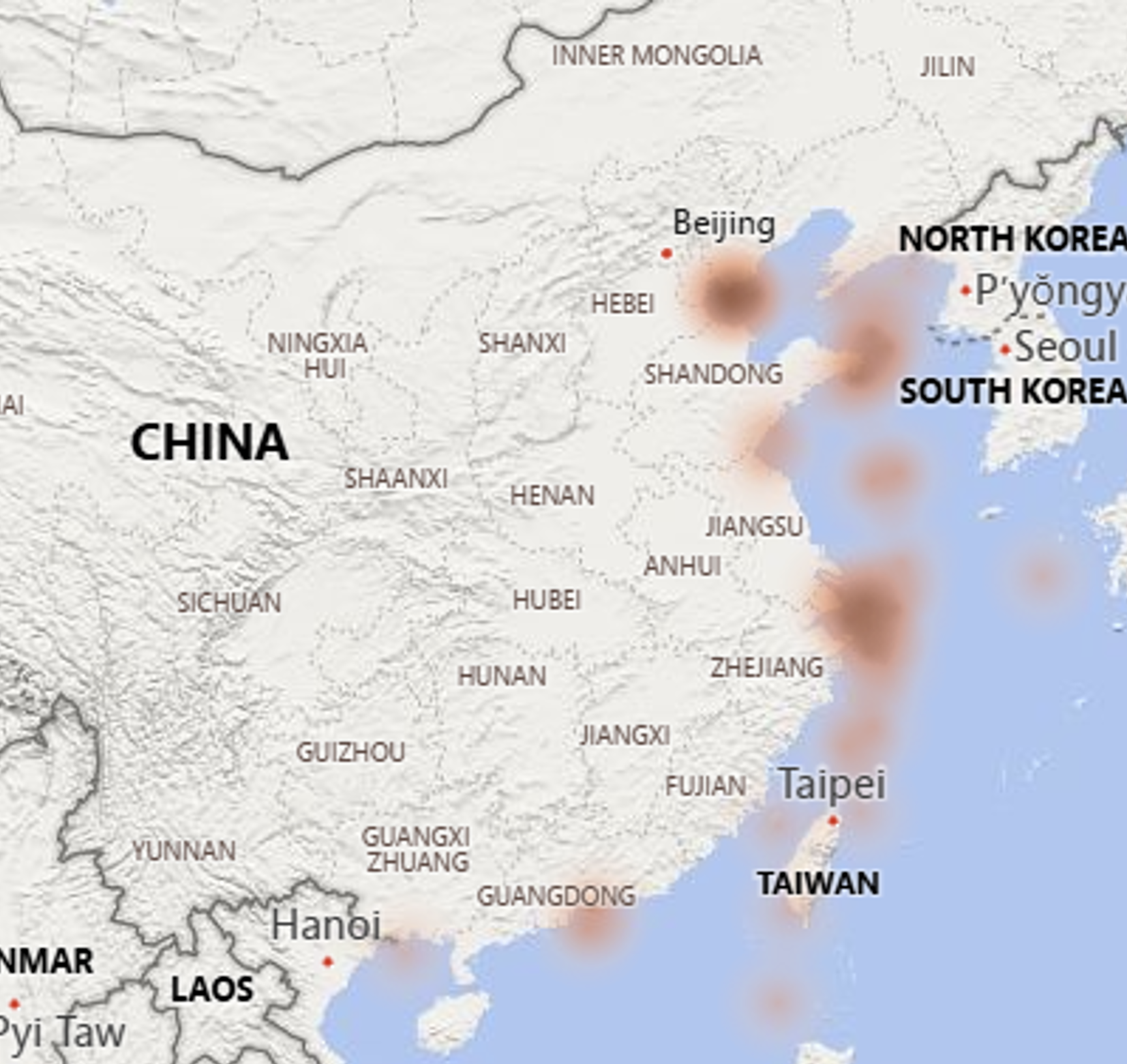
Case study: Delayed action ends in deadly collision
During the hours of darkness while navigating through a high-density fishing ground, a Panamax bulk carrier collided with a fishing boat in East China Sea. The fishing boat capsized and sank, resulting in the loss of multiple lives. The incident occurred not long after the local seasonal fishing ban was lifted.
Investigation findings:
• The bridge team relied primarily on AIS information displayed on the radar to assess the situation and failed to maintain an effective visual lookout or conduct systematic radar observation.
• The Officer on Watch (OOW) initially attempted to alter course for collision avoidance using autopilot. After switching to manual steering, only small course alterations were applied, resulting in an inadequate and delayed rate of turn.
• The merchant vessel was proceeding at full sea speed before the incident. Even after a close-quarters situation had developed, speed was not reduced or otherwise used as part of the collision avoidance action.
• The bridge team failed to use light and sound signals to alert the fishing boat during the approach and up to the point of collision, despite being unable to ascertain the fishing boat’s intentions.
• The OOW and lookout suspected that a collision may have occurred. However, they did not feel any abnormal sound or hull vibration, and the fishing boat’s lights remained visible after passing. The vessel did not stop to verify whether a collision had occurred, and continued the voyage without rendering assistance to the fishing boat or its crew.
• The fishing boat was not manned in accordance with statutory requirements due to insufficient number of qualified watchkeeping officers. It maintained course and speed during the approach, but made an uncoordinated alteration to port shortly before the collision, which contributed to the collision.
The OOW and lookout were subsequently held criminally liable under Chinese law in connection with the incident.
Typical causes
Although each case will differ, recurring issues include inadequate passage planning, ineffective lookout, delayed avoiding actions, and uncertainty in post-incident response.
High speed: Often, vessels proceed at high speed when navigating through fishing ground, while their engines are not ready for immediate manoeuvring. This can result in reduced time for decision making, discourage timely speed reduction for collision avoidance, and increase the severity of consequences should a collision occur.
Insufficient bridge watchkeeping: Insufficient bridge manning or ineffective lookout arrangements may compromise situational awareness and collision avoidance. On merchant vessels, lookouts often perform multiple duties, such as acting as helmsman or conducting safety rounds, which can detract from their primary watchkeeping responsibilities. On fishing vessels, crews may have limited navigational training or be primarily engaged in fishing operations rather than maintaining a proper navigational watch.
Over-reliance on AIS or radar: While many fishing vessels operating in Chinese waters are equipped with AIS, the equipment may be inoperative, switched off, or transmitting inaccurate information. With AIS data integrated into radar and ECDIS displays, watchkeepers may place undue reliance on AIS and associated information. Radar remains an essential tool for collision avoidance, but it also has practical limitations, particularly in detecting small wooden or fiberglass fishing vessels, fishing gear, or low-profile targets. Its effectiveness may be affected by rain, sea clutter, poor visibility, target aspect, improper tuning, or inappropriate range-scale selection. As a result, AIS and radar information may not always provide a complete or accurate picture of the navigational situation, especially in areas of dense fishing activity.
Communication challenges: Attempts to communicate with fishing vessels via VHF radio may fail due to language barriers and the absence of an effective listening watch. Light and sound signals may also be less effective, as they may not be detected or acted upon because of limited watchkeeping and manning arrangements on board fishing vessels.
Last-minute actions: Merchant vessels sometimes leave collision avoidance action until the last moment. Such late manoeuvres may be ineffective, particularly where course alterations are made using autopilot or are insufficient to achieve a substantial rate of turn. The situation can be further complicated if fishing vessels take unexpected or uncoordinated action, increasing the likelihood of collision.
Marking of nets: Merchant vessels may face claims for damage to fishing nets. Detecting fishing gear can be challenging, as nets and their markers may be difficult to identify visually, particularly during daylight hours. While lights fitted to markers may improve detection at night, radar reflectors are not commonly used and crews often have to rely on visual identification of marker buoys. The use of AIS markers is also increasing; however, in areas of intensive fishing activity, additional AIS targets may contribute to clutter on radar and ECDIS displays, potentially complicating situational awareness.
Recommendations
Voyage planning: Due attention should be given to designated fishing zones and high-risk areas (HRAs) for collisions between merchant vessels and fishing boats, as recognised by maritime authorities (e.g. China MSA’s circular and English translation; Shandong MSA’s circular). When planning routes to Chinese coastal waters, reference should be made to the ship routeing systems(e.g. Liaoning Coastal Ship Routeing System) and guidance on coastal public routes (e.g. Coastal Shipping Routes) published by the authorities.
Bridge team composition: We also recommend increasing bridge watchkeeping level in advance so as to ensure that OOW has sufficient assistance at night as well as during day. Other onboard activities for relevant crew members should be planned accordingly to ensure that members of the bridge team are well rested for navigation-related duties.
Safe speed: In areas with high fishing activity, vessels should proceed at a safe speed with engines ready for immediate maneuvering. The OOW should be empowered to use engine movements as part of collision avoidance action when necessary.
Use all available means: Bridge teams should make full use of all available means for lookout, risk assessment, communication, warning, and collision avoidance. This includes visual lookout, radar/ARPA, AIS, ECDIS, VHF communication, and light and sound signals. AIS and radar information should not be treated as conclusive on their own.
Keeping clear of clusters: Where OOW is able to detect a cluster of fishing boats, it is advisable to alter course well in advance to avoid navigating through it.
When a collision is suspected to have occurred: Render all possible assistance to the fishing vessel, contact nearest VTS/MSA and maintain a record of all evidence including VDR data.
Further information
Collision avoidance – safeguarding the lives and livelihoods of fishermen
Related Articles


Gard is a member of