Gard has observed a rise in navigation incidents involving fishing nets over the past year. Our correspondent, KOMOS, reports that issues with offshore stow nets remain persistent, largely due to minimal restrictions on where this gear can be installed outside of designated anchorages and prohibited fishing zones.
Written by

Published 06 July 2026
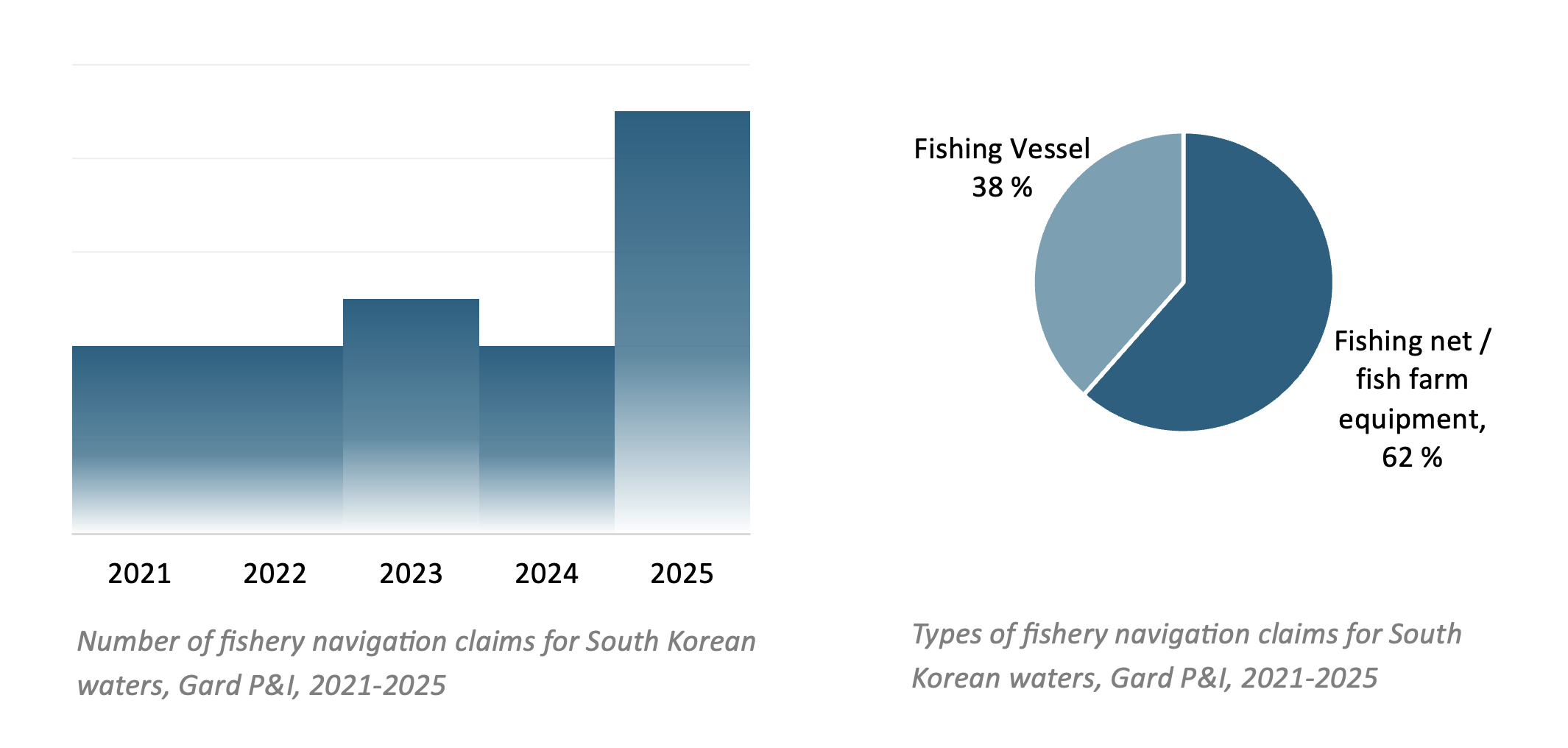
Our analysis of Gard P&I cases in Korea reveals a significant trend. Notably, 2025 saw a 125 per cent increase in navigation incidents compared to 2024, with the vast majority of these cases involving contact with fishing nets.
Location of incidents
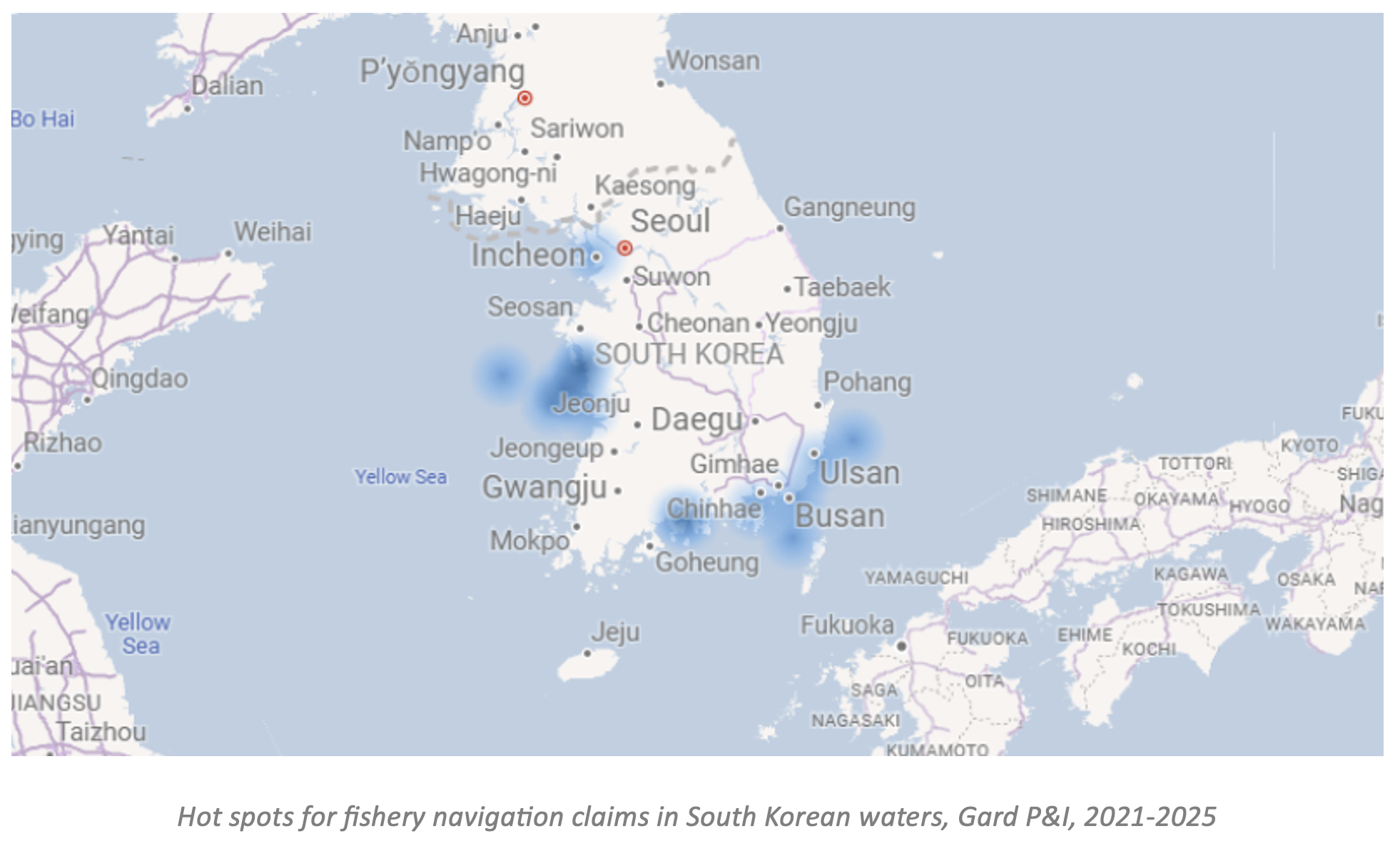
Claims data from the last five years reveal that navigation incidents involving fishing nets are concentrated in specific regions. As per our correspondent, stow net-related incidents are most prevalent in the waters off Boryeong, with additional claims frequently reported in the waters off Mokpo, Seosan (Daesan), Taean, and Pyeongtaek.
Vessel type
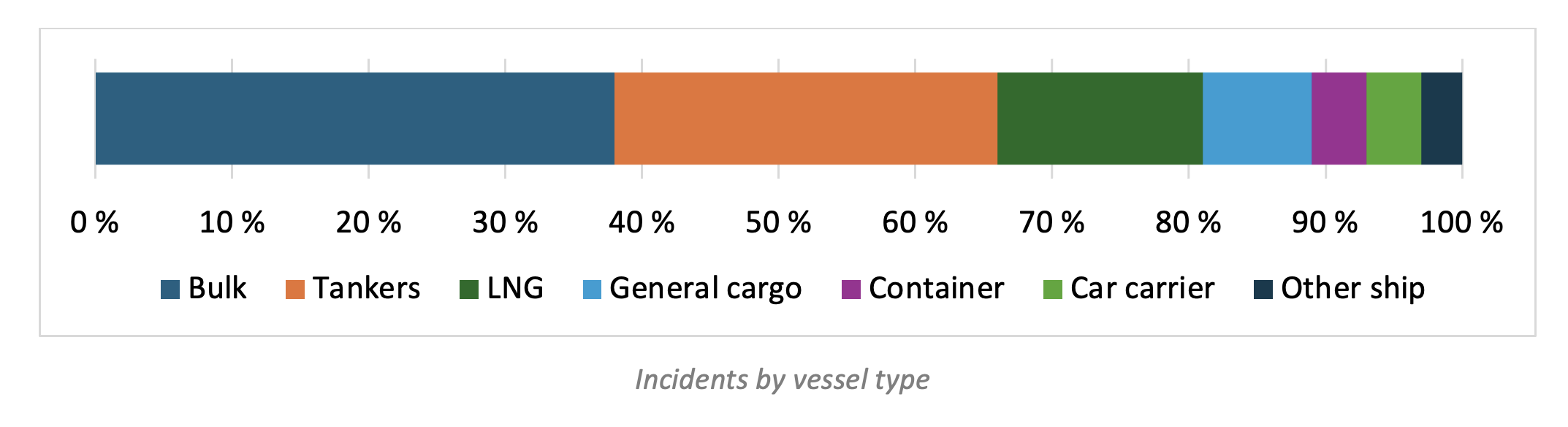
Bulk carriers accounted for nearly 40 per cent of the vessels involved in these incidents, followed by tankers at 28 per cent, LNG carriers at 15 per cent and General Cargo at 8 per cent. Notably, liner vessels (container and car carriers) represented the smallest share, accounting for a combined 8 per cent.
Two critical factors
In addition to the geographic and vessel-type data, our analysis highlighted two critical factors:
Unique port calls: Almost all incidents involved a "unique port call", meaning the vessel had not visited that specific port in the 12 months preceding the incident.
Hours of darkness: The majority of reported cases occurred during hours of darkness.
Case studies
Case study 1: Damage to stow net at anchorage
A vessel anchored at Daesan OPL during daylight hours after confirming no visible signs of fishing gear in the immediate vicinity. Two days later, upon heaving the anchor, the crew discovered significant sections of fishing net entangled around the anchor chain. A subsequent post-incident assessment revealed that three offshore stow net sets belonging two different fishermen had been damaged, with roughly 60–70% of the gear lost. As per the vessel there were no warnings broadcasted by port control, fishing authorities, or fishermen on VHF or Navtex. There were also no visible surface markers or AIS transponders.
The claim was for KRW 30,000,000, of which 60% was for damages done to the equipment & nets, 20% for removal of damaged gear, and another 20% for re-installation of the new fishing gear.

In a similar case off Boryeong, an offshore stow net located within a vessel's swinging circle became entangled in both the ship’s propeller and rudder, as shown in the below image. The stow net is highlighted with a black circle.

Case study 2: Damage to stow net while underway
While a vessel was transiting near Geomoondo Island (Yeosu) during the hours of darkness, it passed a nearby fishing boat at close range, causing the boat’s deployed gear to become entangled in the vessel's propeller. The sudden, forceful pull created an immediate hazard to the fishing boat; recognizing the danger as their vessel was being dragged by the stern, the skipper of the fishing vessel cut the main rope and recovery line of the sea anchor, effectively separating the boat from the merchant vessel.
The fishing boat had been using a sea anchor with a 230-meter subsurface trailing rope, which was entirely invisible to the passing ship due to the darkness. Following a report of the incident to the Coast Guard by an angler boat in the vicinity, the subject vessel was instructed to stop for an inspection. Upon boarding and investigating the circumstances, the Coast Guard classified the event as unintentional entanglement, allowing the vessel to be released without detention or further action.
Case Study 3: Contact with aquaculture farm outside licensed limits
A vessel approaching an anchorage off Geoje, was subsequently associated with damage to mussel aquaculture facilities during passage through a coastal farming area. Analysis of vessel track data indicated that the vessel had entered the installation zone, with its length and track suggesting contact with approximately 15–17 longlines. The installation zone was outside the marked fairway. Vessel was under pilotage at the time.
A finding during the investigation was that 17 of the 23 longlines had been installed outside the designated licensed area, despite the existence of a valid permit for the farm. The claim amount was KRW 500,000,000. The incident was ultimately treated as a civil matter with no evidence of intentional wrongdoing.

Case study 4: Damage to net being deployed by fishing vessels
A vessel transited between two fishing boats that were actively deploying a net across the fishing ground during nighttime. As per the vessel, there were no light markers for the net, and the OOW therefore considered it safe to pass between the fishing boats. Following the incident, the fishing vessels reported the incident to VTS, which subsequently instructed the merchant vessel to stop for an investigation. In addition to the official investigation, the fishing vessel owner filed a formal maritime distress judgment claim with the Korean Maritime Safety Tribunal, seeking approximately KRW 700,000,000 for the damage.

Key issues identified
Limited detectability: Fishing gear and aquaculture facilities are often submerged, inadequately marked, or not detectable on radar or by sight. Consequently, vessels navigating, anchoring, or drifting in these areas face a heightened risk of inadvertent contact and propeller/anchor entanglement.
Risk of calling a unique port: As mentioned, in most cases, the vessels involved were making a "unique port call." This presents a significant risk as the crew has little or no recent experience with that port and may face unfamiliar navigation conditions.
Heightened risk during darkness: The majority of incidents occurred at night. Many small fishing boats and their gear have weak or no lighting, causing buoys, ropes, and lines to blend into the dark sea. Often, these hazards remain invisible to the bridge team until it is too late to take evasive action.
Peak seasons: Incidents along the western coast (Mokpo, Boryeong, Taean and Pyeongtaek) are most prevalent between April and October, coinciding with increased seasonal deployment of stow nets and other fishing gear targeting migratory species. A corresponding reduction in such incidents is observed between late June and August, reflecting the decline in fishing activity during the annual fishing ban for certain species (e.g. swimming crab), as per our Correspondent, KOMOS.
Proximity to navigation routes: Fishing installations are frequently placed close to navigation channels and port approaches, limiting sea room for commercial vessels. Not following the designated navigation lanes and crossing the fish trap lines is also something we have noticed in a few cases.
Lack of navigational information: The information on location of fishing facilities might not be promulgated and the bridge watchkeeping officer on commercial vessels. As per our correspondent, the port authorities do not provide navigational warnings to inform vessels of the location of fishing facilities. It is to be noted that in the case of stationary fishing nets and aqua farms, fishermen are obliged to provide signs indicating the fishing grounds, fishery facilities, etc. If they fail to do so, the authorities may impose fines as mentioned below.
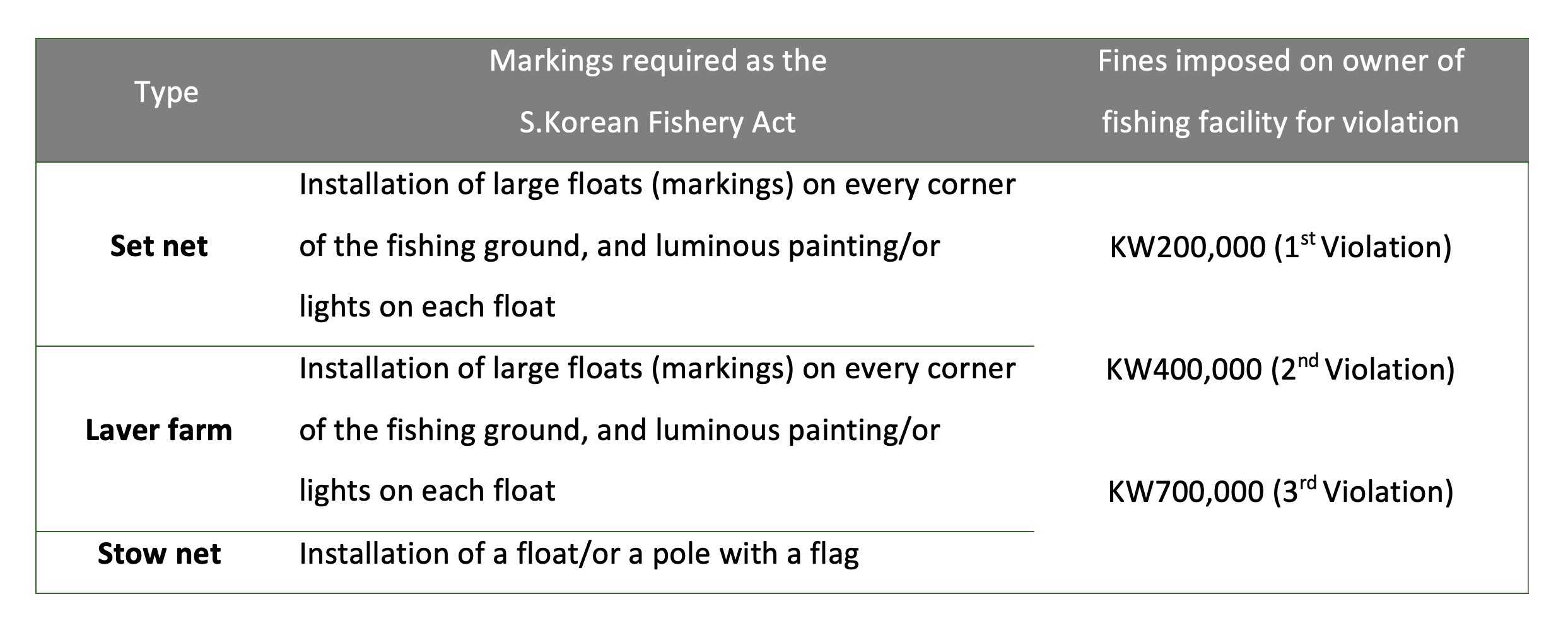
However, enforcement appears limited, and the penalties for non-compliance are relatively minor when compared to the liability which the owner of the commercial vessel faces. Additionally, certain smaller gear types, such as drift nets, do not require marking under local regulations.
Actions taken against vessels by local fishermen
When damage to fishing gear or facility is noticed, the fisherman will contact the Korean Coast Guard, and they will then launch immediate investigation to determine whether the vessel caused the incident. This is done using information from VTIS and AIS track record of the vessel, followed by interviewing the crew. In most cases LOU will have to be provided by the Club before the vessel is allowed to continue her voyage. The claim submitted by the fisherman will usually be for the following items:
Costs for replacing damaged gear, such as fish nets, rope, anchor etc.
Labour costs for assembling works
Loss of earnings. This may represent a significant proportion of the claim amount, depending on whether the incident occurred during fishing season or not.
When a vessel is notified of a fishery claim:
The crew should backup the VDR data.
ECDIS records of the vessel’s past track should also be saved to protect owners’ interests.
Evidence, such as photographs showing that the boundaries of the fishing facility were not conspicuously marked, should be preserved. This might prove to be helpful in negotiating the amount claimed.
The vessel’s P&I Club and/or correspondents should immediately be contacted to provide assistance.
The fishing vessels will often report the incident to the local Coast Guard, who will carry out a formal investigation. A questionnaire that is typically asked to a Master is attached here.
Korean Coast Guard Typical Inquiry QuestionsAllocation of liability
According to our correspondent, KOMOS, shifting any portion of liability to the owner of damaged fishing gear is practically difficult for the following reasons:
Under stow net fishing permits, owners are required to install warning markers, such as flag poles or floats, to alert vessels in the vicinity. While crews involved in these incidents frequently report that they observed no surface markers, our experience indicates that the nets are almost invariably protected by these required marking floats, as shown in the image below. It is worth highlighting that even when damage is caused to unauthorized aquaculture facilities, local courts generally still recognize these as valid property damage claims.
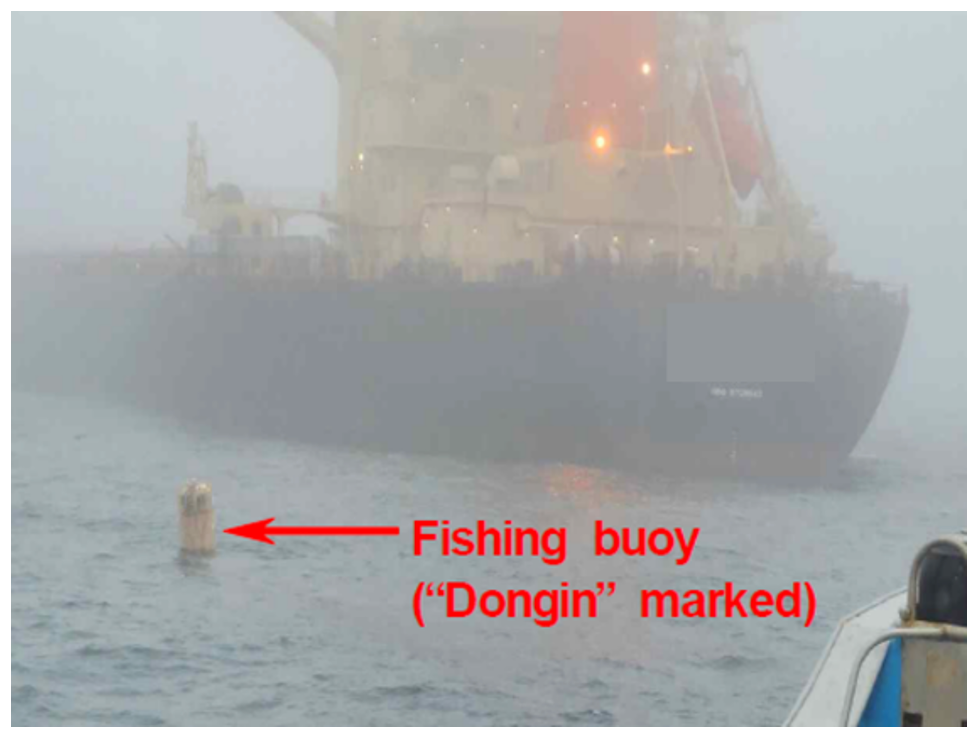
Under the relevant Fishery Act, stow net owners are legally permitted to install their gear in virtually any adjacent coastal sea region, except for highly restricted areas such as designated shipping lanes. Consequently, most incident locations are within areas where the installation of such nets is fully authorized by law.
Overview of local cultivation practices
As highlighted by our correspondent, KOMOS, incidents involving stow nets remain persistent. We therefore provide a brief overview of stow nets below. For a more comprehensive guide on other local cultivation practices (including set nets, laver farms, and ark shell seed farming), please refer to the attached resource below.
Korea fishing_Overview of local cultivation practicesStow nets
It is a type of fishnet that is anchored in one position rather than being drifted, trawled, or manipulated by hand. Stow nets are secured by one anchor and placed depending on the direction and strength of the current to catch various kinds of fish, i.e. anchovy, hairtail, mackerel etc. Stow net consists of a net assembly that resembles a sack, canvas, anchor, a buoy, wire ropes and the mouth is held open by an attached frame. An offshore stow net configuration typically comprises a single main anchor, the net set, and four marker buoys, spanning a total length of approximately 315 meters. Because these nets are typically secured by only one anchor, the entire assembly pivots and shifts with tidal currents, with a potential radius of movement dictated by the combined length of the anchor line and the net.
Mariners should be particularly vigilant during the primary fishing seasons, which run from March to June and from August through January of the following year.
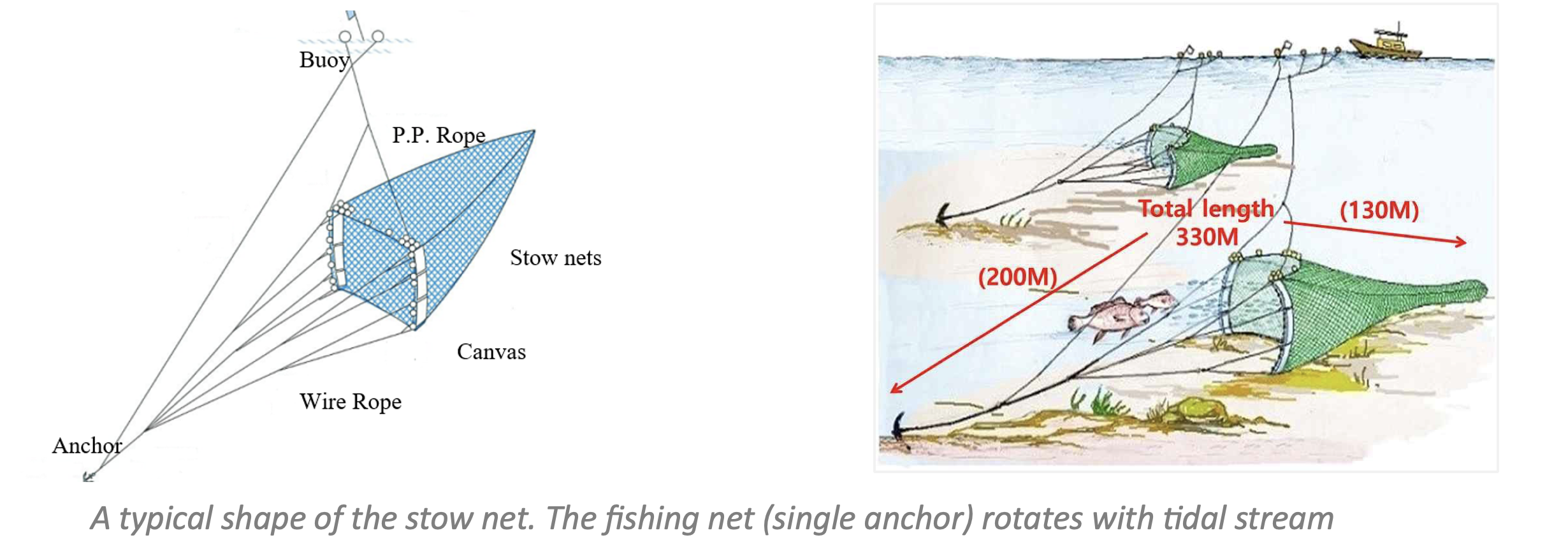
Vessels on voyage often spot buoys with flags floating on water but may not be aware of the net below and pass through it, causing damage or loss of the net resulting in adrift or lost buoys, nets, rope etc.
Key recommendations
Anticipate hidden hazards: Fishing gear and aquaculture installations may be submerged, poorly marked, or not readily detectable by radar or visual observation. Their position and extent may also vary due to tidal and current effects. Navigation should therefore be conducted on the assumption that hazards may extend beyond what is visible, and that the true footprint of fishing activity may not be clearly defined.
Enhance lookout effectiveness: Maintaining an effective lookout is critical. Radar settings should be optimised to detect small targets, including appropriate adjustment of range scale and pulse length. Bridge teams should use all available means to interpret signs of fishing activity. The presence of isolated buoys or fishing vessels should be treated as an indication of potentially extensive submerged gear. Passage through apparent gaps should be avoided unless unavoidable.
Regulate speed and route: Speed should be reduced in areas known to contain fishing activity, and vessels should remain within defined or customary navigation routes wherever possible. Particular caution is required when deviating from established channels.
Improve passage planning: Passage planning should incorporate all available information on fishing activity, including nautical charts, Korean Notices to Mariners, sailing directions, agents, pilots, VTS, P&I correspondents, and past vessel track data. Known installations should be clearly marked on charts. It should be recognised that VTS and pilots may not always be aware of newly established facilities. This level of detail is especially critical for crews visiting the region for the first time.
Prioritize daylight navigation: To mitigate the risk of striking hidden fishing gear, prioritize daylight arrival at the pilot station to ensure optimal visibility of surface markers and buoys.
Verify anchoring zones: Where anchoring instructions are provided by pilots or VTS, bridge teams should seek confirmation that the area is clear of fishing gear, and such communications should be recorded.
Maintain buffer: A safe distance should be maintained from fishing vessels and buoys, particularly in dense fishing areas. As guidance, vessels should keep clear of fishing boats by at least 1 nautical mile where practicable, and maintain a minimum distance of approximately 1,000 metres from fish trap lines when approaching anchorages such as Yeosu outer anchorage.
References
Article on Fishery Damage by KOMOS
Offshore stow net fishing ban area coordinates from Enforcement Decree of the Fishery Resources Management Act
We would like to thank our correspondent in South Korea, KOMOS Marine Surveyors and Engineering Consultants, for contributing to this article.
Related Articles


Gard is a member of