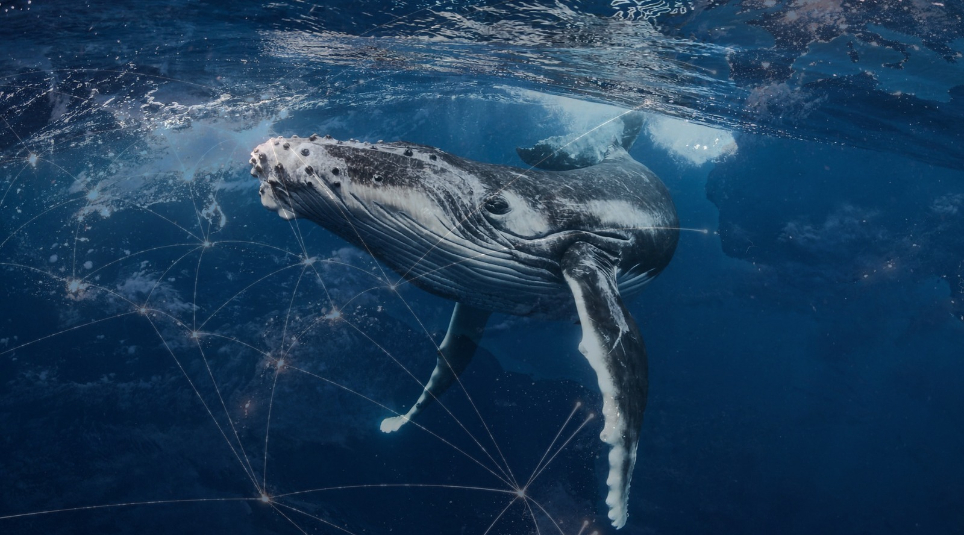
Whales and other marine mammals follow ancient migration routes across the world’s oceans. Where these routes intersect with shipping activity, collisions, underwater noise and disturbance can lead to injury, behavioural disruption and, in some cases, mortality.
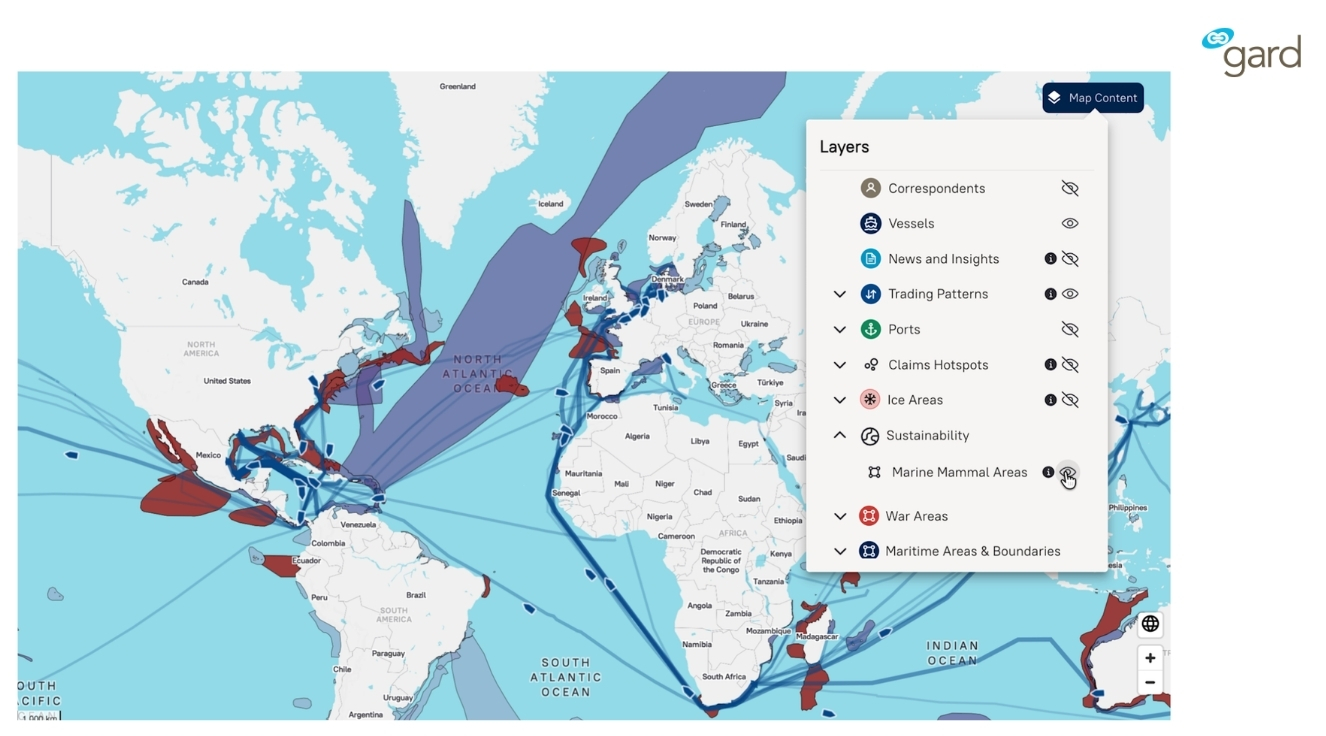
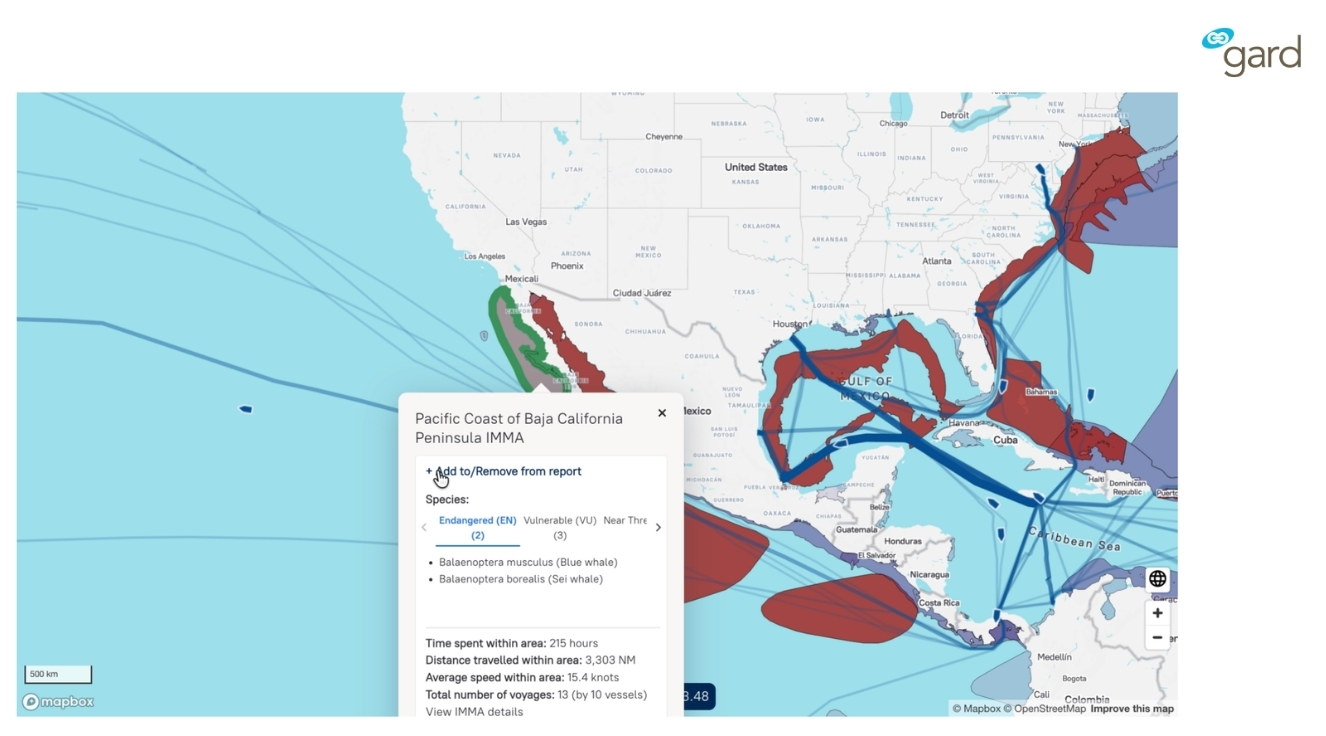
Gard’s new portal feature enables Members and clients to visualise how their trading routes interact with Important Marine Mammal Areas (IMMAs) and generate metrics to support decision-making and sustainability reporting.
Watch the introduction video here
From general guidance to fleet-specific insights
For many years, Gard has shared best practice and operational guidance on whales and other marine mammals through its series of insight articles. This new feature builds on that work by analysing fleet trading patterns in relation to Important Marine Mammal Areas.
IMMAs are areas of the ocean that are important for marine mammals, including for migration, feeding and breeding. These areas are identified through a rigorous, expert driven process led by the International Union for the Conservation of Nature (IUCN).
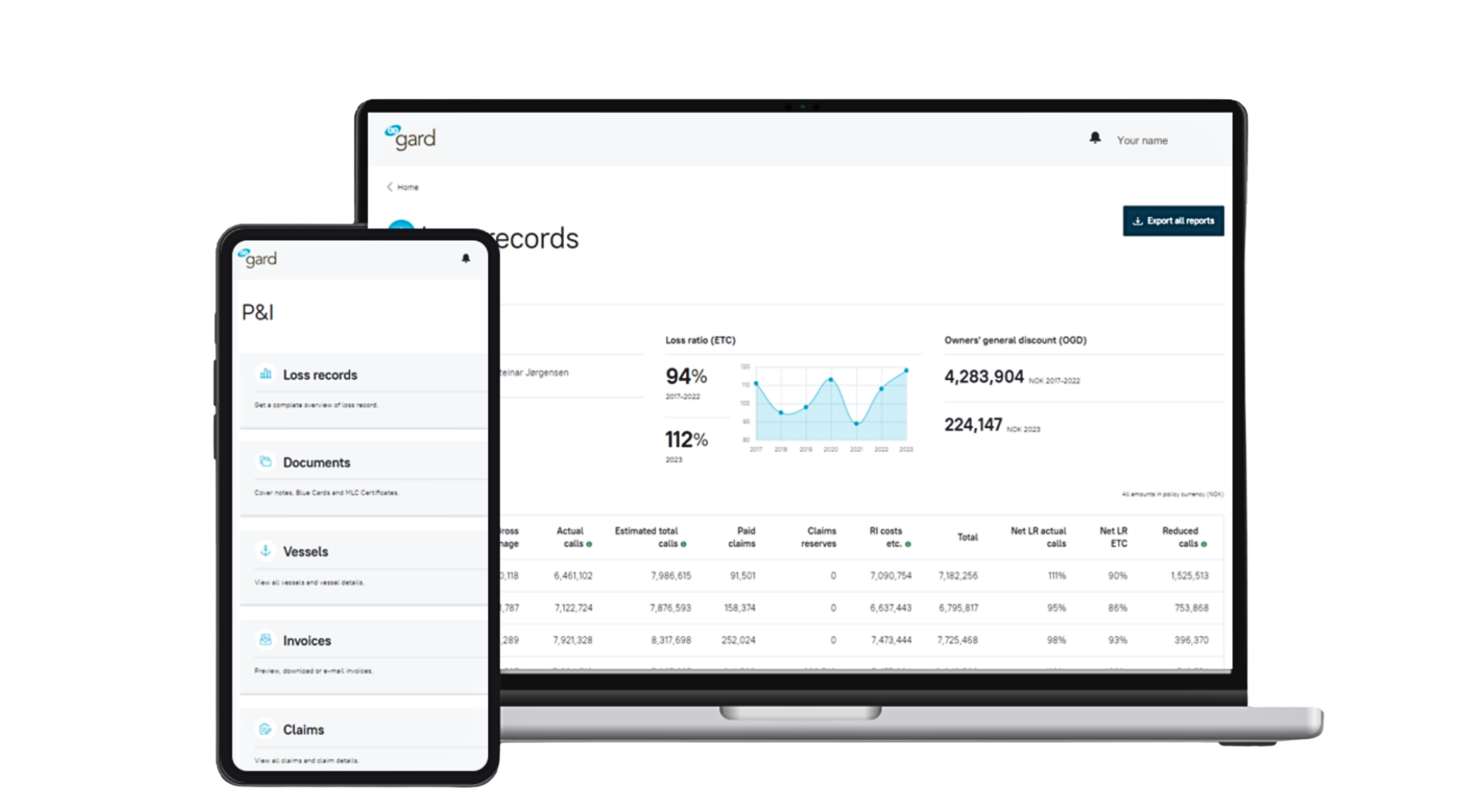
Click here to access the Gard portal
Practical tools and data
Through our portal, Members and clients can now:
Understand how their fleet operates within Important Marine Mammal Areas (IMMAs) globally, including areas supporting critically endangered (CR) and endangered (EN) species
Access key metrics that help quantify this interaction, including:
Average vessel speed within IMMAs
Time spent by vessel or fleet within these areas
Number of CR and EN species associated with the areas in which vessels operate
Generate and download structured reports containing fleet and vessel specific data
Supporting strategic decision-making and sustainability reporting
The tool supports a strategic understanding of how operations interact with ocean biodiversity and can also be used for reporting under both mandatory and voluntary frameworks. These include the Global Reporting Initiative (GRI), European Sustainability Reporting Standards (ESRS), the Sustainability Accounting Standards Board (SASB), and the Taskforce on Nature-related Financial Disclosures (TNFD).
More biodiversity metrics on the way
This is the first in a series of ocean biodiversity layers that will be added to the Gard Portal, gradually expanding the range of marine biodiversity data available to support Members and clients.
Contact us
All members and clients with access to the Gard Portal facilities can access this reporting feature. If you have any questions or would like a short demo of the tool, please contact us at sustainable_business@gard.no